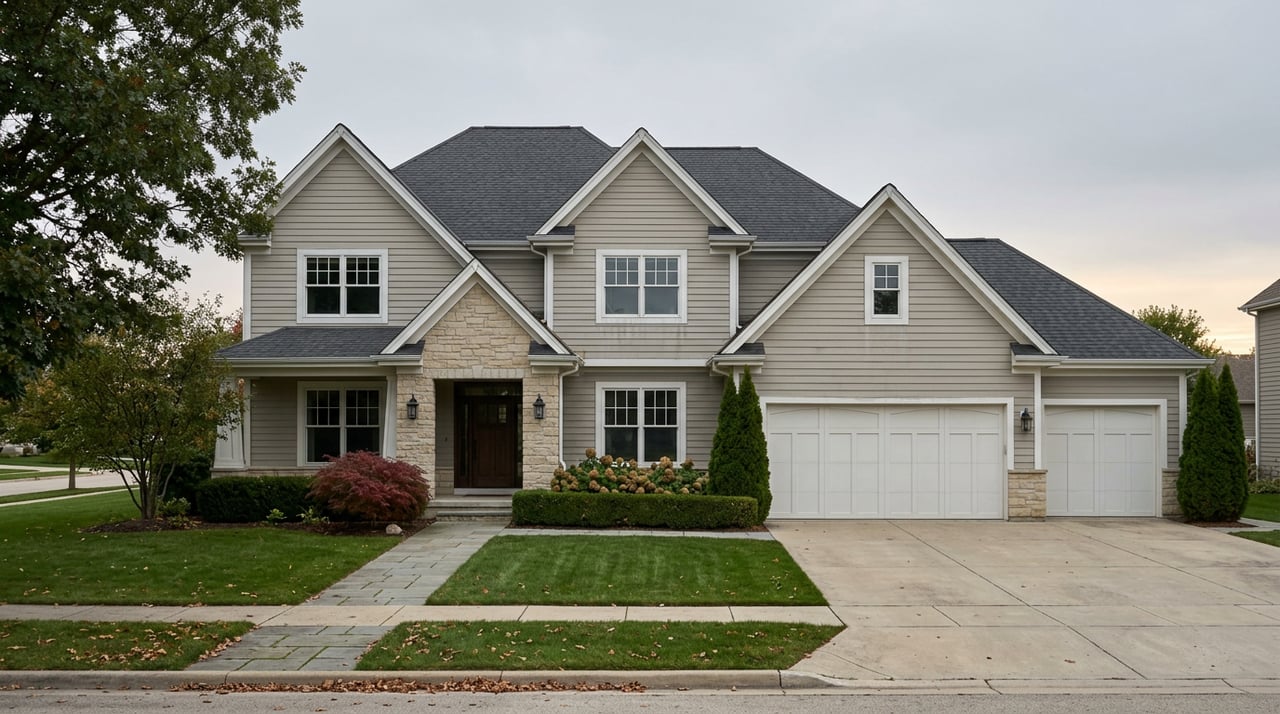
Grand Rapids Homes Sell in Six Days. Downtown Luxury Condos Take Longer.
September 24, 2026
September 24, 2026
A buyer touring a $700,000 unit at River House at Bridgewater Place this summer heard the same line every Grand Rapids buyer hears right now: it's a seller's market, homes go in days, don't wait. Then the unit sat. And sat. Thirty-one days later, it was still active.
That buyer wasn't imagining anything. The headline number and the number that actually applies to a $700,000 downtown condo are two different statistics, and almost nobody separates them before a buyer starts touring.
Over the three months ending in July 2026, Grand Rapids homes sold in about six days on average, with sale prices landing around 102% of asking. That figure gets repeated in every market update, every listing pitch, every "should I wait to buy" conversation this year. It's accurate. It's also describing a market that most $500,000-plus buyers never actually experience.
Break the metro down by price tier, and a different picture appears. As of September 2026, the core of the Grand Rapids market, roughly $250,000 to $500,000, is where the volume lives: a pending ratio near 149%, meaning more homes are under contract than are sitting active, with move-in-ready properties in feeder communities like Forest Hills, Hudsonville, and Zeeland going under contract in about 21 days.
The $500,000-and-up tier tells a different story entirely.
| Price tier | Pending ratio (Sept. 2026) | Average days on market |
|---|---|---|
| Core, $250K–$500K | ~149% | ~21–24 days |
| Move-up & luxury, $500K+ | ~86% | ~31 days |
An 86% pending ratio means there are more active listings than homes under contract in that tier right now, the only major price band in the metro where that's true. That's not a soft market. It's a market with room in it, and it's the tier where nearly every downtown condo in Grand Rapids sits.
The gap isn't about downtown losing appeal. It's about how a mortgage payment scales. When the 30-year rate climbed from 6.43% on July 2 to 6.66% by July 30, that quarter-point move cost a $600,000 buyer far more per month than it cost a $250,000 buyer. The forecast consensus for the rest of 2026 still sits between 6.0% and 6.5%, with Fannie Mae near 6.4% and the Mortgage Bankers Association near 6.5%. July's close above all three means the upper tier is the first place hesitation shows up when rates run hot, and the last place it disappears when rates ease.
That's the mechanism behind the number. It isn't that luxury buyers don't want Grand Rapids. It's that a bigger loan amount makes every rate tick louder.
River House at Bridgewater Place is the clearest example of what that tier looks like on the ground. It's the tallest all-residential building in Michigan, a 34-story tower on the west bank of the Grand River with 205 units, an indoor pool, 24-hour concierge, and deeded parking built into every unit. It's also a building where owners pay association dues based on square footage, on top of whatever the reserve fund needs for a roof, an elevator, or HVAC equipment that's aging on Michigan's freeze-thaw schedule.
That combination, amenity-rich building plus a 31-day average market, is exactly where a buyer's patience earns something. In a six-day core-market transaction, there's rarely time to negotiate a seller concession or push for a longer inspection window. In the luxury tier, there often is. Buyers who use that time to actually read the condo association's reserve study, not just the listing sheet, are the ones who avoid discovering a special assessment six months after closing. A failing roof or an aging elevator system is one of the most common triggers for a large one-time assessment in a high-rise association, and the only real defense is asking to see the numbers before you're under contract, not after.
The 86% pending ratio isn't happening in a vacuum. It's about to run into new supply that's no longer speculative.
The Fulton & Market project, a $796 million mixed-use development on the former Charley's Crab site along the Grand River, received a $561 million Transformational Brownfield tax credit approval from the state late last year. The plan includes 76 luxury condos and a 130-room hotel across a residential and hotel-condo tower, developed by Fulmar Property Holdings, a company affiliated with the DeVos and Van Andel families. Groundbreaking on the office tower, the first of the project's three buildings, was targeted for this past summer, with the residential and condo towers to follow and full build-out targeted for 2029, according to Crain's Grand Rapids Business. As of this August, the project was still being presented to the City Commission as anticipated rather than confirmed underway, so the timeline is worth watching rather than treating as locked in.
Seventy-six new luxury condos landing in a tier that already has more listings than buyers under contract is a meaningful addition, even phased over several years. It won't move the market overnight. But the tax credits are approved and the site is cleared, which puts this well ahead of most "developments to watch" lists that never get past the rendering stage.
Set against that supply is a demand signal that already arrived. The Acrisure Amphitheater, a 12,000-seat riverfront venue that's part of a larger 31-acre mixed-use development, opened for its inaugural concert season this past May, with Lionel Richie headlining the first show, according to WOODTV's roundup of West Michigan developments. A venue that size, walking distance from Bridge Street restaurants and breweries, is exactly the kind of amenity that makes downtown living more attractive to the buyer who's on the fence between a condo and a suburban commute, and it's now a lived experience for downtown residents rather than a rendering.
So the honest read on the next twelve to eighteen months isn't simple. More luxury condo supply is on the way. A proven draw for downtown living already opened its doors. Which force wins that argument depends on how quickly Fulton & Market's residential towers actually get built past the office tower, and whether this first amphitheater season turns into a lasting pattern or a one-summer spike in interest. Neither outcome is settled yet, and any market update that tells you it is skipped a step.
If a six-day, multiple-offer market sounds like exactly what you want, that's still the reality for most of Grand Rapids, and it's especially true in family-home communities like Ada and Cascade, where the core-tier pace holds. If you're looking at a $500,000-plus condo or estate-level property, the math is different, and it works in your favor for now. An 86% pending ratio gives you room to ask for what you actually need: a longer inspection period, a look at the reserve study, a seller credit toward closing costs. Buildings that have sat 30-plus days aren't red flags. They're where the leverage lives this fall.
That window is tied to two things outside anyone's control: where mortgage rates land through the rest of the year, and how fast Fulton & Market's residential towers move past groundbreaking. Neither is guaranteed to hold steady. If you're weighing a downtown purchase, the smartest move is working with someone who's tracking this segment building by building, not just quoting the metro-wide headline.
Does an 86% pending ratio mean luxury condos aren't selling? No. It means there are more active listings than pending sales in that price band, which is a sign of buyer leverage, not buyer absence. Well-priced, well-presented units in this tier are still closing, just on a slower calendar than the rest of the market.
How do I evaluate a building's reserve fund before making an offer? Ask the association for its most recent reserve study and financial statement, and look specifically at funding levels for major systems, roof, elevators, HVAC, that carry the highest risk of a special assessment in an older high-rise. This is standard due diligence in any condo purchase, and it matters more in a building old enough to be approaching a major system's replacement window.
Will the Fulton & Market condos affect resale value at existing buildings like River House? It's too early to say with certainty. The office tower was the first piece slated for groundbreaking, with the residential and condo towers phased in afterward and full completion targeted for 2029, and the project was still listed as anticipated rather than confirmed underway as of this August. New luxury inventory generally gives buyers more comparables and more choice, which tends to favor buyers over sellers in the short term, but the effect on any specific building depends on how demand holds up as the amphitheater season and riverfront work mature.
If you're trying to time a downtown purchase or sale against numbers like these, that's exactly the kind of conversation worth having before you write an offer. Kate Houseman tracks the Grand Rapids luxury and condo market building by building, not just headline to headline. Schedule a free consultation to talk through what the current tier data means for your specific search or listing.
This article is general information, not legal, tax or financial advice. Consult a qualified professional about your situation.
Stay up to date on the latest real estate trends.
Get assistance in determining the current property value, crafting a competitive offer, writing and negotiating a contract, and much more. Contact me today.