How Cascade Township Zoning Could Affect Real Estate
September 10, 2026
September 10, 2026
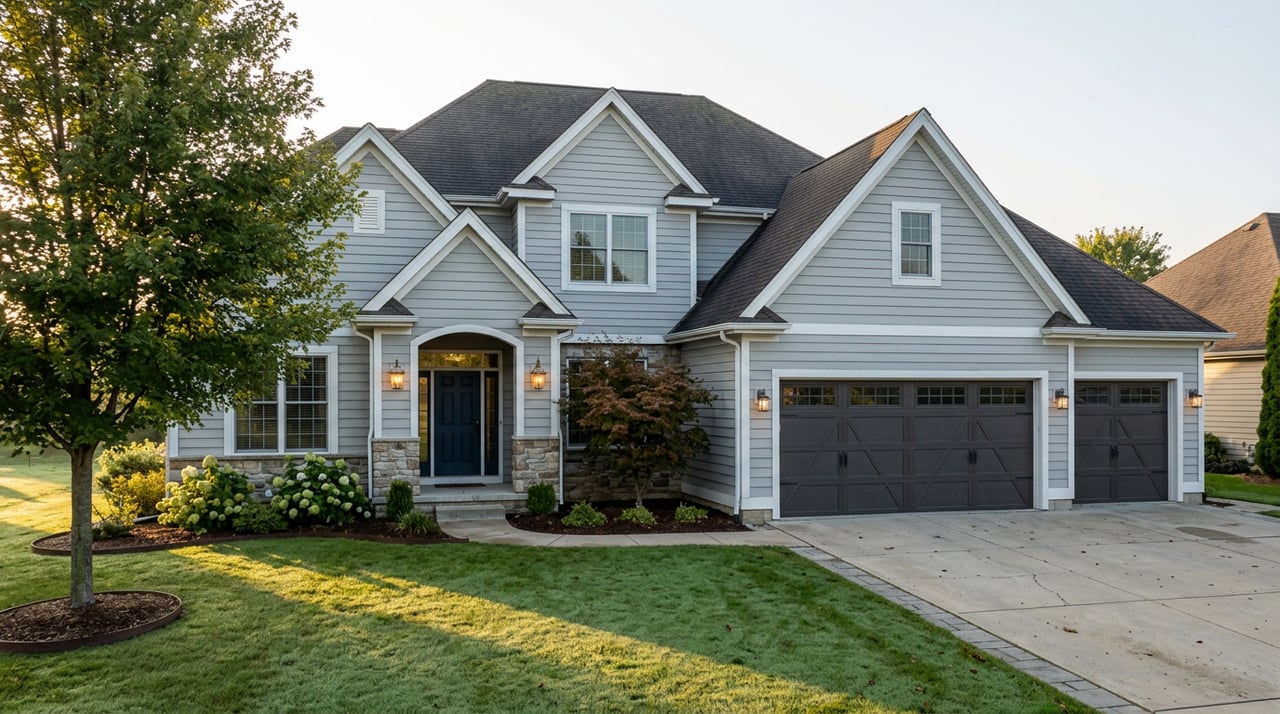
A buyer walks a gravel-edged private road in Cascade on a Saturday afternoon, past mailboxes clustered at the entrance and a scatter of ranch homes tucked behind mature oaks. The listing agent mentions the quiet, the acreage, the school district. Nobody mentions that six weeks earlier, the future of that exact road, how wide it has to be, how many homes can sit on it before the township requires it to become public, was decided by a margin thinner than most subdivisions' guest lists.
On August 4, 2026, Cascade Township voters approved a new zoning ordinance by 3,727 votes to 3,560, a difference of 167 ballots out of more than 7,000 cast. That result replaced a zoning code written in 1989 and settled a fight that had split the township board, drawn tens of thousands of dollars from real estate trade groups, and put private roads, village density, and data centers all on the same ballot question. If you are shopping in Cascade right now, or comparing it against Ada or another Grand Rapids suburb, the vote is not background noise. It is the reason the township's growth pattern over the next decade looks the way it does.
The story starts earlier than August. On February 11, 2026, the Cascade Township Board of Trustees adopted the new ordinance in a narrow 4-3 vote, intended to replace rules that officials said had become inconsistent after decades of piecemeal amendments. The old code, township leaders pointed out, was written for an era chasing big-box retail and industrial parks, not a township now built around single-family neighborhoods, a growing village center, and a rural east end residents wanted preserved.
The board's narrow margin was a preview. Opponents, led by a resident named Daniel Grzywacz, gathered 1,954 valid signatures on a referendum petition, comfortably clearing the 1,799 needed to force the question onto the August primary ballot. That single move suspended the new ordinance and kept the 1989 code in effect for another six months while the two sides campaigned.
The campaign got real money behind it. Campaign finance records showed the Greater Regional Alliance of Realtors and Michigan Realtors backing a local committee opposing the changes, spending more than $100,000 on legal counsel, a public relations firm, and a professional signature-gathering operation. Supporters, including Township Supervisor Grace Lesperance, argued the update simply implemented what residents had already asked for in the township's 2024 Master Plan.
When the votes were counted, the new ordinance won, but barely. If 84 voters had switched their votes, Cascade would have gone back to square one and the board would have had to draft an entirely new code from scratch.
Here is the detail that matters most for anyone currently touring homes in Cascade: the new ordinance applies only to new development and redevelopment. Existing homes are not required to change anything. If you already own, or are buying, a house that exists today, this vote does not touch your property directly.
What it does touch is everything built around you from here forward. According to the township's own summary of the changes, the ordinance includes:
According to Fox 17, a separate provision caps private roads at eight homes before a developer must convert the road to public standards at their own expense. That single number is worth remembering if you are looking at a property on a private road anywhere in the township. It does not affect the road you are buying today, but it will shape whether that road can ever add another handful of houses without a costly public conversion.
The practical effect is that Cascade is now regulating itself at two different speeds, and knowing which speed applies to a given address matters more than the median price on a listing sheet.
Along Cascade Road and the 28th Street corridor, the new rules are designed to encourage growth. The township's Village Reimagined plan has been pushing toward a walkable, small-town core since residents named a "downtown village" their top strategic priority back in 2022, and the new architectural and density-bonus standards give that vision a legal framework it never had under the 1989 code. One Cascade resident and parks and pathways committee member, Scot VanSolkema, argued after the vote that the corridor's existing infrastructure can support exactly this kind of responsible growth.
On the township's rural east end, the opposite instinct governs. The private-road and water/sewer provisions make sprawling new development there harder to build cheaply.
In between sits a market some residents describe as stuck. Fox 17 reported that Sara Fazio, a Cascade neighbor and township board of review member, said:
"We are kind of a stagnant township right now for a lot of reasons."
Low turnover and thin resale inventory were part of the argument for updating rules that hadn't changed since Reagan's second term. Whether the new ordinance loosens that up, by making the village core more attractive to build in, or tightens it further, by making private-road expansion harder, will only become visible over the next few building seasons.
The referendum answered the big question, but it opened a smaller and more urgent one. Cascade's board passed a temporary moratorium on data center development while the zoning fight played out, and, according to Debatable World, that moratorium expires September 11, 2026, the day after this piece was published.
The township's Planning Commission has been drafting permanent standards for high-power, high-water-use industrial facilities like data centers, and those standards have to slot into whichever zoning framework voters chose. Because the new ordinance passed, the commission's work now plugs into a code that, unlike the 1989 version, actually contemplates modern industrial uses near the airport corridor. That corridor is not idle land. Gerald R. Ford International Airport, which sits inside Cascade Township, just opened a $135 million terminal expansion and a new consolidated rental car facility this summer as part of a capital program exceeding $600 million, and that kind of investment tends to pull commercial interest toward the land around it.
In other words, the referendum decided the rulebook. The Planning Commission is still writing the specific play that governs one of the township's most consequential potential land uses, and that decision lands this month.
If you are weighing Cascade against Ada, East Grand Rapids, or another Kent County suburb, the zoning outcome is the clearest signal available right now about where Cascade's housing stock is headed. Expect future inventory to concentrate near the village core and the 28th Street corridor, where the new density bonuses make building easier, rather than spreading evenly across the township. Expect the rural east end to stay closer to its current character, with new development there constrained by the private-road and water/sewer provisions. And if a property you are considering sits on a private road, it is worth asking directly how many homes are on that road and whether it already meets the new 26-foot standard, because that detail determines how much room exists for that neighborhood to grow before a costly road conversion becomes the next owner's problem.
None of this changes what you can do with a home you already own. It changes what gets built next door, down the block, or across the corridor from it, and in a township this compact, that is not a small distinction.
Does the new ordinance affect a home I already own or am buying as-is? No. Per the township's own guidance, the rules apply only to new development and redevelopment. Existing properties are not required to change anything to comply.
What should I ask about a property on a private road? Ask how many homes currently sit on that road and whether it meets the 26-foot fire-access width standard. Roads with more than eight homes face new conversion requirements that could affect future development potential and cost.
Is the zoning question fully settled now? The referendum settled the broad framework, but the Planning Commission's permanent standards for data centers and other large industrial uses are due by September 11, 2026. Those standards will determine how land near the airport corridor gets treated going forward.
Zoning fights rarely make it onto a buyer's checklist, but in Cascade this year, the outcome of one determines whether the street you're touring today looks the same in five years or becomes the next stretch of village growth. If you're trying to read what this means for a specific address, or for how Cascade stacks up against another West Michigan suburb you're considering, Kate Houseman can walk through it property by property. Schedule a free consultation and get a straight answer before you write an offer, not after.
This article is general information, not legal, tax or financial advice. Consult a qualified professional about your situation.
Stay up to date on the latest real estate trends.
Get assistance in determining the current property value, crafting a competitive offer, writing and negotiating a contract, and much more. Contact me today.